Friday, September 29, 2006

BookEnds Talks to J. B. Stanley

J. B. Stanley
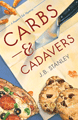
Book: Carbs & Cadavers
Publisher: Midnight Ink
Pub date: September 2006


J. B. Stanley taught sixth-grade Language Arts in North Carolina for the majority of her eight-year teaching career. Raised as an antique lover by her grandparents and parents, Stanley also worked part-time in an auction gallery. An eBay junkie and food lover, Stanley now lives in Richmond, Virginia, with her husband, two young children, and three cats.

Author Web site: www.jbstanley.com

BookEnds: Describe your book in 50 words or less.
J. B.: James "Professor Puff" Henry may as well have "loser" stamped on his forehead. Divorced, overweight, shy, and living at home, he relies on books and his favorite snack—cheese puffs—for sweet relief from his problems. Seeking a social life, James joins a supper club, and while dodging delectable temptations, the dieters (a.k.a. The Flab Five) work together to shed pounds and find the killer who has struck fear in this tight-knit community.

BookEnds: What is your favorite thing about this book?
J. B.: It’s funny and it’s real. Everyone has something about their body they would like to change. At one point, everyone has had a zipper resist on its way up the track of one’s pair of jeans.

BookEnds: What other authors do you find inspiration from?
J. B.: I love gritty thrillers and admire authors who have experienced much of what they write about, such as Michael Connelly and Patricia Cornwall. However, I like to escape to the foreign villages created by M. C. Beaten and Rhys Bowen as well. And I love historical mysteries, such as Bruce Alexander’s. I’ve tried to create a Beatenesque village in Carbs & Cadavers and capture some of the feeling in historical mysteries in my first book, A Killer Collection.

BookEnds: Why have you chosen to write in the genre in which you write?
J. B.: Because I enjoy reading cozies and because my grandmother (she’s 92) said if I write about a bunch of sex and gore she won’t read my books. Hey, she’s my only grandma—I gotta listen!

BookEnds: What’s your next book? When and where should we look for it?
J. B.: Thanks for asking! Book 2 in my antiques and collectibles series, A Fatal Appraisal, is due out October 3.

BookEnds: Who are your favorite characters and why?
J. B.: The ones with flaws. I hate the high-heeled, skinny, perfectly made-up heroines who can scale cliffs and make a tender pot roast all in one day.


To learn more about J. B. Stanley, see Our Books at www.BookEnds-Inc.com.

Thursday, September 28, 2006

Deb Baker's Book Launch Party

As mentioned in the post on self-promotion, our authors have come up with many ingenious ways to promote themselves and their books. This blog entry comes from Deb Baker, author of the Yooper Mystery Series, who describes the book launch party she put together for her latest release, Murder Passes the Buck (Midnight Ink, August 2006).


When was the last time you were invited to a launch party to celebrate the release of a local author’s first mystery?

Exactly.

That’s my answer, too.

Never.

I’ve never, ever been invited to one. But I’d love to go.

So I decided to make the debut of Murder Passes the Buck a very special blast-off event.

My favorite independent bookstore liked the idea and, best of all, they agreed to allow me to serve alcohol. Wine, I knew, was the elixir of life that would draw the biggest crowd. What’s a magical night without a special brew?

The invitations announced a launch party complete with "beverages." Proper attire suggestions included summer casual or blaze orange (Murder Passes the Buck takes place during hunting season).

I sent invitations to everyone I knew, including my children’s teachers, the gas station attendant, members of my exercise class. If you passed me in your car every day, you were invited. I also tacked up posters at our small library inviting the entire community to share in my success.

“You invited the entire town,” my husband said, aghast. “And you’re buying drinks all night?” His voice crept up an octave.

“Not to worry,” I replied. “I left the refreshment part out of the town flyer. Only real true supporters will show up.”

I worried about everything. What if too many people came? Fat chance. What if nobody came? I’d sent out over 100 invitations. Should I have sent more? Nobody would come, I just knew it.

How many bottles of wine would I need? In case people really did come.

“Make a deal with the liquor store,” my experienced buddies advised. “Tell them you’ll buy all the supplies at their store but you have to be able to return anything you don’t use. Order four cases of really large bottles of wine because everybody we run into says they’re coming. And buy tiny wineglasses, plastic five-ouncers.”

I loaded up with wine, cheese, crackers, and chocolates. I wore my orange hunting vest and my "Herb’s Bar" ball cap. My husband was the designated bartender so he could monitor the wine consumption. Friends had volunteered to keep the bookstore clean and to stand at the door to encourage any walk-ins to join the party. This wasn’t an exclusive event and I wanted to make sure everyone coming in to browse was welcome.

I arrived early to set up, only to find a few friends already waiting. Before I knew it, the place was jammed with well-wishers. Orange hunting garb was the dominant fashion statement of the evening.

I spotted my husband, wineglass in hand, mingling with the crowd, looking proud and happy. One of my friends had relieved him so he could get into the spirit of things. He had no problem doing that.

I didn’t quit signing until the bookstore owner whispered in my ear. She’d sold seventy-five copies and she was completely out. I supplied her with fifteen more from the trunk of my car.

At the end of the evening, my favorite bookseller had a big grin on her face. Not only had she sold all of my books, but she’d had a run on the rest of the stock as well.

She couldn’t believe the energy in the store.

I couldn’t believe I wasn’t dreaming.

But I wasn’t.

—Deb Baker

To learn more about Deb Baker's books, see Our Books at www.BookEnds-Inc.com, or visit her site at www.debbakerbooks.com.

Wednesday, September 27, 2006

Busy Agents and Their Obligations

As I wrote yesterday, the post on Maintaining Enthusiasm garnered many great comments. One of the most interesting and upsetting to me was from a poster named “stressed and confused.” I hate to think that I’m making anyone even more stressed and confused, especially since my hope for this blog is to help clear up many of the misconceptions about this business and explain what it is agents, or at least what it is this agent, does all day. “Stressed and confused” asked:

"Don't have time to even read a query letter?" Pardon me. I know you're busy with your already established clients, but if you don't have time to read a query letter how in the world do you stay in business as an agent? And why not just say "not accepting new clients." I don't get agents and why they are always so busy. Shouldn't part of their busy obligations be to read query letters?

This comment elicited some great responses from readers as well as the team here at BookEnds. I’m going to start with a quote from a fellow publishing professional, someone who has been in the business for years, but has worked “behind the scenes,” in other words, not an acquisitions editor or agent.

I was kind of sympathetic to the commenter's bewilderment, but mostly I was just bewildered myself.

The more comments I see, the more I think A LOT of people out there writing books don't realize they're part of a business. It's like if you were an investment banker, everyone would understand that you're busy and overworked and can't just spend your day chatting about possible stocks, but since you're an agent you should be fun and completely accessible and want to read everything because, hey, books are so fun and not serious business.


And that’s the truth. In any business your primary responsibilities are to do those jobs that bring in money (it’s how we eat, pay the bills, and feed our dogs). If you’re a florist you don’t spend your days giving flower-arranging tips to customers who aren’t buying, and if you’re a photographer you don’t take pictures first as free “samples” in the hopes that possible customers will sign up with you later. So why is it expected that agents should give out editorial advice with every rejection letter and be spending all of their days reading unsolicited queries and proposals?

When I first read this comment my response was to try to make nice, make sure everyone still likes me, and explain that I was exaggerating, but then I thought more about it and the truth is that I don’t have time to read query letters. That’s not what I spend my days doing—it’s what I do when I’m at home, early in the morning or late into the night. In fact, reading submissions and queries is not an obligation at all. It’s something I want to do because I am always looking to find new clients, but it is not part of my daily responsibilities. My obligations are to my clients, those people I have written agreements with. Those people who have signed a contract with BookEnds, entrusting that I will make their careers my primary responsibility.

That doesn’t mean I don’t want to receive queries and new proposals, I just need to explain where an agent’s obligations lie.

So what is it I’m so busy doing? When it comes to reading, my primary responsibility is to my clients. At least once a day I receive something from a client, something I need to give my opinion on. It might be a new proposal we’re going to submit to publishers, a chapter for the book she is currently contracted for but struggling with, an ad she’s put together for one of the trade magazines, an email to an editor, cover copy, or even the full manuscript for the next book. When it comes to things I read, these take priority over unsolicited submissions.

I also have to review contracts and, if things are good, they can come in at a rate of one a week. I am not in the job of simply trafficking material through. My job is to make sure the contract is in the best interest of my client, which means whenever I get a contract from a publisher I need to carefully read it through to make sure that all of our negotiated points have made it in, that there’s nothing else I should be negotiating, and first and foremost that this is a fair contract for the author, my client. If I am negotiating new points or going back on points that were missed, this is a process that could take days.

Daily I talk to editors. I check in to find out the status of submissions, checks, and contracts. I call them to find out what they might be looking for, whether or not they want to see a new project I’m preparing for submission, and to just touch base. After all, one of my primary jobs is to know what is going on in the world of publishing. Isn’t that what you want an agent for, to have the contacts and knowledge that you don’t?

And to not make this too long, I also speak with clients and answer questions and concerns they might have, help edit a proposal before it goes out on submission, research proposals I’m considering for representation, read trade publications and keep updated on the market, review royalty statements for accuracy and keep the financial accounts for my clients, submit and sell books, guide clients on publicity and marketing . . . and the list goes on. I would love if some of the agented authors who read this blog would jump in and add any of those things their agents do for them because I think the one thing that is hard to understand is what an agent does besides sell books to publishers.

In a nutshell, not having time to read queries doesn’t mean that I don’t want to take on new clients. It just means that I have a busy day and that while I’d like to have time to sit and read I don’t, which is why I work seven days a week and why you’ll often hear from me on a Saturday or Sunday.

I hope this helps clarify a little about why an agent is so busy and helps you understand that it’s not just something to say while we’re lying on the couch reading books and eating chocolates.

—Jessica

Tuesday, September 26, 2006

Requested Full

A recent post, Maintaining Enthusiasm, garnered a number of great comments and questions and gave me a lot more to talk about. One poster asked (actually in response to another poster):

Does that mean if you wanted to read a full and it arrives, does it get a quick read, or is there a teetering stack of "fulls," just like partials and queries? Thanks! :)

And another poster asked:

Do you (and editors) read a full manuscript all in one go (i.e., one at a time) or do you usually have several on the go at once?

In response to that first question, well, actually a little of both. Let me tell you how I work. I can’t guarantee all agents work exactly this way, but I would bet everyone does something similar. When my mail comes I sort through it. I pull out all of those partials that sound particularly interesting to me and any fulls that I’ve requested that still sound interesting to me. Now, there is one caveat to this, and this refers back to previous posts. Your material only gets pulled out if you remind me why it was requested. More often than not requested partials and fulls have landed in the “slush” pile simply because the letter wasn’t enticing and didn’t remind me that I requested it. Or, it mentioned that this was material I requested but didn’t tell me anything else—anything that would make me want to read it quickly. When the material arrives I still need to be excited to see it; therefore, whatever you put in your query letter that excited me should go in all follow-up correspondence so that I grab it just as quickly the second and third time around.

Now, the trouble with this system is that when things start to pile up and I go a few weeks without reading submissions, my “read this quick” pile gets larger than I like. So there is a stack of fulls just like partials and queries, but it is usually not teetering.

As for the second question, usually I prefer to read the full in one sitting (which is probably why it can take me so long to get to) and I don’t like to have more than one going at a time. My preference is to give it my full attention. If I feel it’s too easy to put down to start something else, it’s unlikely I love it enough to want to represent it.

—Jessica

Monday, September 25, 2006

Shameless Self-Promotion

Confessions of Shameless Self-Promoters, a book by Debbie Allen, a client of mine as well as one of the world’s leading authorities on self-promotion, got me thinking about the shameless work all successful authors do to promote their books and brand their names. I’ve been asked a number of times what an author can do to promote herself and her book, and what better group to ask than the people who do it daily . . . my clients.

Below is a short list of just some of the most shameless things some of my clients do in an effort to sell their most recently published books. I have to admit, a few even shocked me.


I carry bookmarks with me everywhere. On the front is the cover of my newest release, and, since I write an ongoing series, I have a list of all the books in the series with ISBNs on the back. Beyond sticking one inside most of my bills and correspondence with complete strangers (I imagine our phone company thinks I’m certifiable) I shamelessly pass them out to everyone I meet—checkers in the grocery store, other customers in line, waiters in restaurants, even the girl working the window at Taco Bell got one with my five-dollar bill for lunch. When my husband went into our local bank to make a deposit, he said every teller had one of my bookmarks behind her glass partition and he wondered how they got them . . . duh-oh. Doug (husband) goes to motorcycle rallies and always carries bookmarks with him to hand out to the other guys. I write erotic romance—I think he does it so he can tell them he’s my research assistant.
—Kate Douglas, Wolf Tales II, Wild Nights (Kensington Aphrodisia)

Don't be afraid to talk to people. I go up to them in bookstores or Wal-Mart and look at something near them. Then I point out my book and say, "That one's really good." Sometimes I admit to writing it, sometimes I don't. But 9 times out of 10 they buy it, or they tell me they already read it!
—Michele Dunaway, The Marriage Campaign (Harlequin American Romance, August 2006)

I run a podcast called the Sci Fi Traveling Road Show. Other blatant self-promotion schemes include blogs, websites, and interviews in various newspapers and radioshows.
—Margaret H. Bonham, author of 22 books on pets, pet care, and science fiction and fantasy

Closer to my release date I intend to make up small booklets of my first chapter with the cover of my book on the front to use as promotional material. An author I know did this, and while it’s fairly expensive, it seemed to work very well. I think if you can hook people with your first chapter, they’re more likely to buy the book.
—Christine Wells, Scandal’s Daughter (Berkley Sensation)

I mailed my book to all of the free press papers in my area stating that I was an author and a resident of the county/city and would be glad to be the subject of an article. I included my website so the editor could check out my work and read my bio. I am going to be written up in two of these publications and it'll only cost me the price of a few books and postage. I think it's important to become as well-known in your hometown as possible.
—J. B. Stanley, Carbs & Cadavers (Midnight Ink)

I had business cards made with a graphic on the front that an artist created for me, and my website information on the back. I put one in every envelope I mail out. (I love sending something back to the credit card companies who stuff so much into their envelopes with the bills.) I leave one of those cards on the table when I go out to eat, on shelves in stores when I shop, in the airport when I fly. No flat surface is safe!
—Lynn LaFleur, If This Bed Could Talk (Avon Red)

I've been known to reverse shoplift. I leave a copy of my book in bookstores and grocery stores. Then when someone picks it up and goes to check out, the book will not scan since it is not in the inventory. The clerk will enter the book into the system and then reorder since the last one was just purchased.
—Jamie Novak, 1,000 Best Quick and Easy Organizing Secrets (Sourcebooks)

When the book came out, I sent its flyer to the members of all the organizations of which I am part. Actually, I joined a number of other organizations so as to have access to their membership list. I also put flyers in all my neighbors' mailboxes, and even in the mailboxes of the mayor, city council, staff, and city volunteers in my hometown. Then I also assigned the book in a relevant class in the university where I teach.
—Salvatore R. Maddi & Deborah M. Khoshaba, Resilience at Work: How to Succeed No Matter What Life Throws at You (Amacom)

Since I can’t tell if any self-promotion actually works, I try only to do what I think is fun. My favorite promotion tool is the “book pin.” I have a pin made from the jpeg of each of my book covers. I wear the current book on my lapel when I go out. It’s an excellent conversation starter. Women notice jewelry—especially when it has the word “Naked” prominently displayed—and when they ask, I feel free to tell them all about my books. I also try to keep a sense of humor about promotion. When I’m in super promo mode, I carry my bookmarks and hand them out to everyone—the bank teller, the mammography nurse, the lady getting information from me before my colonoscopy. I sent some to one of my sons who was in college a few states away. He was supposed to give them to local bookstores, but was unsuccessful in this endeavor. Instead, he handed them out to all the women who came to the next party he and his roommates sponsored. Hmm. I guess I’m happy about that. . . .
—Sally MacKenzie, The Naked Marquis (Zebra)

I do extensive promotions—ads, mail-outs, conference goodies. My RWA chapter is holding our first conference this month and I took the opportunity to hold a book launch.Now I have 80 fellow romance writers to invite to my launch and it will be a great chance to meet people and network. When I learned Jo Beverley, a New York Times bestseller and one of our founding chapter members, would be visiting and wanted to do a signing, I arranged one for both of us. So my first signing will be with one of my favorite authors. I also search for venues that are not the usual romance targets to broaden my audience.
—Sharon Page, Sin and Wild Nights (Aphrodisia)


—Jessica

Friday, September 22, 2006

BookEnds Talks to Christopher Passante

Christopher Passante
Book: The Complete Idiot's Guide to Extreme Weather
Publisher: Alpha Books
Pub date: September 2006


Christopher Passante is the managing editor of The Beaufort Gazette in Beaufort, South Carolina. A longtime newspaper reporter and editor, he also has written numerous outdoors columns and has dabbled in extreme sports under heavy weather, including sailing, skiing, kayaking, and mountain sports. He lives with his wife, Robyn, in Port Royal, South Carolina.

BookEnds: Describe your book in 50 words or less.
Christopher: The past few years have delivered some of the most awesome and destructive weather patterns in history. From blistering heat and icy blasts, to hurricane winds and the Greenhouse Effect, The Compete Idiot's Guide to Extreme Weather enables readers to experience the incredible ferocity of big, bad weather without getting soaked, wind-tossed, thunderstruck, or frozen. And with the CD-ROM that accompanies the book, they'll learn what it's like to be a real-life storm tracker.

BookEnds: What do you think distinguishes your work from other similar books?
Christopher: It offers a survey of extreme weather around the world—without the boring science. It also offers both timely and timeless examples of severe weather, and does so in a fun-to-read way.

BookEnds: What is your favorite thing about this book?
Christopher: That we can talk conversationally about severe weather without making it trivial.

BookEnds: Who do you consider the audience for your book?
Christopher: Novice to expert. Weather Channel fanatics to the casual weather wonderer. Face it, we all live in areas that are prone to heavy weather. Understanding how extreme weather is generated through science, example, and trend-watching can help us cope with Mother Nature's fiercest.

BookEnds: Besides the obvious audience for your book (those the publisher targets), who else do you think can benefit from what you’ve written?
Christopher: There are so many good historic examples of storm data in this book that anyone looking for research on the subject of extreme weather would benefit greatly.

BookEnds: How do you think your book is important to readers?
Christopher: It could save your life.

Thursday, September 21, 2006

BookEnds Talks to Kate Douglas

Kate Douglas
Book: "Camille's Dawn" in the Wild Nights anthology
Publisher: Kensington
Pub date: September 2006


Kate Douglas has been writing professionally her entire adult life, and says that some days she feels older than dirt, but that it’s certainly a lot more fun with a popular series! She's also a mom, a grandmother, and a wife, all positions that are equally enjoyable. She counts herself one very lucky woman.

Author Web site: www.katedouglas.com

Awards: Three EPPIES for romance and romantic suspense, 2002 Quasar for cover art, LiFE Award for environmentally sensitive stories, UBER Award

BookEnds: Describe your story in 50 words or less.
Kate: Camille Mason died tragically twenty years ago, but her husband’s grief and rage has kept her spirit tied to the earthly plane. Offered one night of passion with his lost love, Ulrich Mason must somehow give Camille peace, yet find the strength within himself to return to life.

BookEnds: What is your writing process like?
Kate: Since my last book was an absolute bear to write, I sat down and thought about the process and what does and doesn’t work. For one thing, I’m definitely a “pantster,” which means, essentially, I wing it. I start out with a vague idea of my storyline and then wait for my characters to tell me what they’re going to do next. Usually it works, especially if I know my characters well enough. Where I blew it in the beginning of Wolf Tales IV (the most recent novel I’ve written) is that I got cocky and, while I knew my hero, I didn’t take the time to get to know my heroine before I started the book.

Usually I “interview” my two main protagonists. I ask lots of questions so that I know things about them that may never appear in the story, but their answers explain their motivation and keeps it consistent. Things like birth order, where they were born, where they grew up—whether urban or rural. Were they into sports or drama in school, did they have lots of friends or were they more of a loner? I knew all that about Tinker McClintock, my hero. An abandoned African-American baby raised by a white family, his foster parents were killed when he was fifteen and he was suddenly thrust into black society without knowing the rules. Even as an adult, he always felt like the odd man out. Lisa Quinn, the heroine, is the sister of one of my secondary characters in Wolf Tales III. I knew her brother and some of her background, so I made the mistake of assuming I knew her personally. Once I realized what was holding me back, I sat down and had a long “talk” with Lisa. A little wine (in this case, whine) and a lot of girl talk later, I had my character, knew what made her tick, and the story flowed . . . and that is only part of the process of writing a book.

BookEnds: How long does it usually take you to write a book?
Kate: I tend to write in layers, first writing the framework, and then adding depth and emotion. I’ve been known to put out up to 12,000 words a day and not have to change a line, but there are days where I’m lucky to write 500 words and they all eventually get tossed. Of course, it also depends on what life is throwing at me at the time, but on the whole, I would say I can write a 30,000-word novella in from two to four weeks and a full-length novel will take me around two or three months.

BookEnds: Why have you chosen to write in the genre in which you write?
Kate: Since I write erotic paranormal romance, I have to laugh at that question, because it’s the one my mother, bless her soul, continually asks me! I’ve always loved the idea of “what if?” and, while I started out reading science fiction, it was an easy segue to paranormal stories and my shapeshifting Chanku. As far as the erotica—I’m not really sure, but I discovered, when I began writing romances over twenty years ago, that I was good at the really hot scenes. In fact, I imagine that’s partially what kept me from getting a NY contract for so many years. I like to say it just took NY a long time to catch up to me! I think the paranormal subgenre is a natural for erotic romance. The entire story is fantasy, which allows the reader to accept the more outrageous sexual aspects of the story without their little personal censor telling them it’s impossible.

BookEnds: Who are your favorite characters and why?
Kate: Since I write a series, I have characters who reappear in future stories after they’re introduced, and my favorite character, the one who has come to represent Wolf Tales, for me, anyway, is Anton Cheval. He’s the one the readers ask me about, the one they all fall in love with after the first book. He’s older, 51 now, in the novella I’m currently writing, Chanku Journey, and, while he’s the most powerful of all my Chanku, he is also the one who feels the greatest sense of responsibility to their species, to his pack, and to his mate. He is so vulnerable where Keisha is concerned, so open to pain if he can’t protect her, that I’ve ended up blubbering more than once when I write his scenes. He’s also the only one with the true powers of a necromancer. He trained as a wizard long before he learned of his shapeshifting abilities, and his powers grow more in every story. He’s a truly fascinating man with many secrets, and I know I’ve still not learned all of them.

BookEnds: Do you see yourself in any of your characters? If so, who and how?
Kate: All of my women are control freaks. SERIOUS control freaks. They have issues with following orders. They tend to speak first and think about it later. They have an overdeveloped loyalty gene. Most important, though, they understand the power of love and the capacity of the heart to let them know when they’ve found the right man. I’m a control freak in a major way, and the day I first met the man I’ve now been married to for thirty-five years, I knew he was “the one.” I even told a girlfriend he was the man I’d marry. The following spring, we were married. Two kids and four grandkids later, we’re STILL having fun! It’s natural for me to write about love at first sight because I’ve been there, and I know how powerful it can be. I can honestly say yes, there are aspects of me in most of my heroines. They’ve got a lot of my faults and hopefully some of my strengths—they’ve definitely got better bodies!—but most of all, they understand the power of love.


To learn more about Kate Douglas, see Our Books at www.BookEnds-Inc.com.
Wednesday, September 20, 2006

Submissions and Rejections

You are a reputable and sought-after agency, and you receive a query from an aspiring writer. You request a partial, then decline politely, using a form letter (no doubt a nice one). Aspiring Writer swallows her dismay, and submits something else. Same result. And again. At what point should Aspiring Writer sigh and say, "It was not meant to be"? Would you ever say, "Please stop sending me queries" (which translates to, "You can't write")? Do you keep a list, and flinch when you see a particular return address? Or will you allow Aspiring Writer to keep submitting indefinitely, in the shared hope that her writing is improving and eventually she'll get it right?

Thank you!


A lot of the authors I represent now were rejected at one point or another . . . by me. If you've done your research and you know for a fact that the agent you are targeting represents the work you are writing, then I see nothing wrong with continuing to submit to her. Bear in mind, however, that names do start to become familiar and we do keep lists of our submissions and rejections. So if you are getting rejected and do decide to resubmit, make sure that the next book is even stronger than the last. And, if the agent took the effort to give you a detailed rejection, then really make the effort to hear and understand what she said and see that your next submission matches that.

Also bear in mind that your work can very well be publishable, but I might not be the right agent to make that happen. It's always best to read some of the books that an agent represents and target as many agents as possible. Finding an agent is so often about finding that person who truly understands your work.

Truth though . . . I have asked authors to stop submitting to me. They are usually the ones who don't pay attention to what I'm representing and get belligerent because of the letters I'm sending. With some there seems to be an idea that because they've sent me so much work I owe them representation.

—Jessica

Tuesday, September 19, 2006

Pulling from Consideration

Admittedly I take too long to get through my submissions. In my defense, I do read them all myself and am busy doing other things. Trust me, I don’t have time to play literati or surf for the best deal on new shoes. I spend seven days a week working in some capacity, so if I’m taking too long to read it’s simply because my Sunday was booked. Whatever the excuse, though, I do apologize to everyone who has been waiting too long (and 10-12 weeks as posted on our Web site is already too long). I wish there was an easy way to read faster, but short of not reading submissions at all or simply not accepting them, I don’t see an alternative.

Despite how long it takes for agents to get back to an author, one thing continues to confound me, and that is the author who pulls her work from consideration when, to the best of my knowledge, she hasn’t made extensive revisions or found another agent. And this does happen at least once a month.

Why would you do that? It really confounds me. Now, it seems to me that usually when an author pulls her work from submission she’s doing so out of anger, as if she’s taking revenge on me for my long reading time. In all honesty, it only clears up my calendar to read other things. So while I do feel bad that the author is angry at me, and that I take so long, I’m always a little relieved that I have one less thing to stress about.

Sorry, I digress. This isn’t supposed to be about me. Back to how it benefits an author to pull a work. Most agents know and admit that we take longer than we’d like to get to submissions, but you never know how the market will change or what will happen from the time your work is submitted to the time an agent finally gets to it. And, most important, you never know what is going on within the agency. I don’t know how many times I’ve read something and sat on it, for weeks and sometimes months. There’s something there, but I just can’t pick it out. Obviously this could go both ways, but there have been times when I talk to an editor who is, strangely, looking for just the thing I’ve been sitting on. Voila! The market has changed and suddenly, this work that has stumped me, is suddenly hot.

So what’s my advice? Unless said agent has an exclusive, leave it there. Keep all of your options open. I have, in fact, asked to see an entire manuscript for work that’s been sitting in my pile for well over four months. You just never know.

—Jessica

Monday, September 18, 2006

Form Rejections

With success comes change.

And one of those changes saddens me just a little. For years, BookEnds prided itself on writing personal or semi-personal rejection letters. That meant including the author’s name and title and trying to give some real reason why we were turning the material down. While some of those reasons may have sounded “form” to you, they were truly how we felt. Maybe we really weren’t inspired, or didn’t feel your book was different enough. It is also possible your platform wasn’t strong enough or your hook big enough. Nowadays, though, we have been forced to use, more frequently than ever, the dreaded “dear author” letter.

I hate them, I really do, but as has been pointed out to me over and over again, time is money, and why am I wasting my money writing letters to people whose work really will never fit for me? Whenever I feel an author is close or I like something about the work, or the person, I will still make the effort to personalize the letter. Unfortunately, one out of every fifty letters or so is a far cry from every fifty.

So I apologize. I apologize to all the writers who work so hard and submit so carefully only to get a very cold “dear author” letter. I wish there was a way for all agents to have the time to give editorial feedback and help, but sadly there isn’t. That would then be an editorial service and, since I need to make money somehow, I would have to charge for that.

—Jessica