I love Halloween. I’m a decorator and any excuse to deck out my house and yard is a good one. So as a special Halloween Trick and Treat I want to make sure everyone gets the opportunity to check out the International Independent Literary Agents Association list of Publishing Myths at www.iilaa.com (click "Enter" then "Publishing Myths"). I promise that it’s guaranteed to both give you a treat and scare you all at the same time. Sadly, it might also trick a few unsuspecting authors.
For those not interested in linking to the site, here are my thoughts on the IILAA list of Publishing Myths:
Myth #1: Writers don’t need an agent—they are a luxury and not a necessity.
I agree, more or less, that this is a myth. It’s true that in this day and age an agent is more and more important to your publishing career. However, I do know a lot of very successful writers who don’t have an agent or went quite some time without one. The little treat in this myth isn’t the myth itself, but the answer. IILAA actually believes that computers are to blame for agents and that because agents are necessary to sell to publishers, retainer fees are necessary as well. Please! So now we are, in a sense, blaming computers for agents who charge fees. Those dang computers! Clearly they are to blame for all the crooks in the world.
Myth #2: Fee-charging agents are scam artists.
So here’s your trick. IILAA is actually trying to convince you that because advances are so small it’s necessary to pay an agent upfront and help cover marketing expenses. Hello! If the advance is so small that your agency can’t live on commission alone, maybe you need to sell more books or work on your negotiating skills.
Myth #3: Your agent needs to be based in NYC.
Okay, here again I can agree that this is a myth. Obviously you don’t need to be in NYC anymore to be an effective and successful agent. However, it’s not because publishers have imprints all over the country (another myth created by IILAA). It’s because email, fax, and phones make it possible to work closely with editors without needing to be in their backyards.
Myth #4: Anything posted on one or more Web sites must be true.
Another instance where I can agree that it’s a myth, but with this one for exactly the opposite reason that IILAA has it posted. As far as I’m concerned you need to be careful about the many scam agents out there who would lead you to believe that charging retainer fees and reading fees is ethical. And one or all of them are happy to put up a Web site and post on message boards their version of how an agent does business.
Myth #5: That Preditors and Editors, SFWA, and Writer Beware, among others, are working for the author.
Certainly not a myth. These are some of the hardest working groups in the business. They have made it their mission to stop scam agents and have been very effective in more than one case. You would do yourself a lot of good to pay attention to what these sites say. IILAA also says that these sites are not trying to protect the author, but destroy independent agents. Another myth. BookEnds is an independent agency and has received nothing but support from these people; it’s bound to happen when you run a fair and ethical agency.
So take a look at the Web site and have yourself a good treat, but do not be tricked by what IILAA is trying to tell you. A good, reputable agency does not charge reading or retainer fees (reasonable expenses are fairly common though).
Happy Halloween! I’m dressing as a witch.
—Jessica
Tuesday, October 31, 2006
Monday, October 30, 2006
Still Accepting Submissions
Recently a reader emailed us to ask the following question:
I've noticed a bunch of discussions on your blog regarding submission response time. If agents are too busy working with their current clients to respond to queries, and even requested fulls, in a timely manner, then they must not need any new clients. Why not simply close your doors to submissions temporarily?
It amazes me how much mileage we are getting out of this one conversation, and while it feels like I continue to repeat myself (and Kim), it seems to bear repeating: The truth is that we are constantly reading submissions—daily. It’s just that there is no way we can read fifty partials or manuscripts a day (roughly the amount we are receiving). So for every author complaining that we are taking too long, there are hopefully just as many getting speedy responses.
We are very, very busy working with our current clients, but since we can’t control the amount of submissions we receive (it doesn’t seem worthwhile to only accept five a day and “return to sender” the rest), we sometimes fall behind. I know many of you have suggestions on how we can fix this or what we should be doing. But the truth is that we are doing the best we can to read and we are using all of our resources to catch up at all times, but as our new assistant said after only one week on the job, “I just realized that there is no point when you’re ever caught up.”
And by the way, I wouldn’t recommend emailing questions, but please do feel free to ask questions in the comments section. We will make every effort to address them in future posts.
—Jessica
I've noticed a bunch of discussions on your blog regarding submission response time. If agents are too busy working with their current clients to respond to queries, and even requested fulls, in a timely manner, then they must not need any new clients. Why not simply close your doors to submissions temporarily?
It amazes me how much mileage we are getting out of this one conversation, and while it feels like I continue to repeat myself (and Kim), it seems to bear repeating: The truth is that we are constantly reading submissions—daily. It’s just that there is no way we can read fifty partials or manuscripts a day (roughly the amount we are receiving). So for every author complaining that we are taking too long, there are hopefully just as many getting speedy responses.
We are very, very busy working with our current clients, but since we can’t control the amount of submissions we receive (it doesn’t seem worthwhile to only accept five a day and “return to sender” the rest), we sometimes fall behind. I know many of you have suggestions on how we can fix this or what we should be doing. But the truth is that we are doing the best we can to read and we are using all of our resources to catch up at all times, but as our new assistant said after only one week on the job, “I just realized that there is no point when you’re ever caught up.”
And by the way, I wouldn’t recommend emailing questions, but please do feel free to ask questions in the comments section. We will make every effort to address them in future posts.
—Jessica
Friday, October 27, 2006
BookEnds Talks to Mary Ellen Hughes
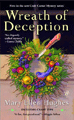 Mary Ellen Hughes
Book: Wreath of Deception
Publisher: Berkley Prime Crime
Pub date: September 2006
Agent: Jacky Sach
Mary Ellen Hughes, in addition to being the author of Wreath of Deception, is the author of two previous mystery novels, Resort to Murder and A Taste of Death, as well as a few short stories. She's raised a son and daughter, has enjoyed dabbling in various crafts, and lives in Maryland with her husband.
Author Web site: www.maryellenhughes.com
BookEnds: Describe your book in 50 words or less.
Mary Ellen: Wreath of Deception centers on Jo McAllister, a young widow, who attempts to start life anew as the owner of an arts and crafts shop. Her plans are jeopardized when the clown she’s hired for the grand opening is found dead in her stock room.
BookEnds: What is your favorite thing about this book?
Mary Ellen: I like the little world I’ve created for my protagonist, Jo McAllister. It’s generally a cozy, small town, with good people who look after each other. Bad things happen, of course, but I think there’s a comforting feeling hovering that all will be well, eventually.
BookEnds: What’s your next book? When and where should we look for it?
Mary Ellen: My next book is tentatively titled String of Lies. The craft it will focus on is beading, and the murder this time will greatly affect Jo’s good friends, Carrie and Dan. It will appear in September 2007.
BookEnds: What was your road to published author like?
Mary Ellen: I always enjoyed writing, joining the school newspapers in both high school and college. I didn’t, though, see journalism as a career for me, so I put writing aside to work in medical laboratories—definitely not a place for creativity. In time, though, my leanings pulled me back, and I started taking creative writing classes and writing short stories. Getting published in mystery magazines was a great encouragement, and I joined a mystery critique group and began writing novels. My first novel was bought by Avalon in 2000, the second in 2002. Then I signed on with Jacky Sach of BookEnds, and very soon had a contract with Berkley Prime Crime for the Craft Corner mystery series. It probably all sounds easier than it was, when condensed to these few sentences, since there were plenty of ups and downs along the way. But the joy of writing makes it all worthwhile.
BookEnds: How do you spend your time when not writing?
Mary Ellen: Writing has been taking up more and more of my time lately, as well as the effort toward promotion that writers need to do, such as book signings, panel talks, and such. I’ve also spent plenty of time learning more about the various crafts that my protagonist is an expert in, so that I don’t have her making silly mistakes. But when I have time off, I like to play tennis with a group of women who give me a challenging (but not TOO challenging) match. There’s nothing more relaxing, I find, than becoming engrossed in the strategy of the game, as well as the exercise it provides. I highly recommend it.
BookEnds: What advice would you give aspiring writers?
Mary Ellen: My advice, not terribly original, I’m afraid, is to write as much as possible. Joining a critique group is a great step toward doing that, because having to read other critique members’ writing critically, in order to give constructive comments on it, really helps you to understand the finer points of writing. You’ll need to develop a thick skin to take critical comments on your own writing, and you may not agree with every comment. But it can’t help but make you examine your own writing more closely, and that can only help you improve.
To learn more about Mary Ellen Hughes, see Our Books at www.BookEnds-Inc.com.
Thursday, October 26, 2006
BookEnds Talks to Livia J. Washburn
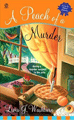 Livia J. Washburn
Book: A Peach of a Murder (A Fresh Baked Mystery)
Publisher: Signet
Pub date: October 2006
Agent: Kim Lionetti
Livia J. Washburn has had the privilege of being a professional writer for over twenty years. She lives in a small Texas town with her husband, James Reasoner, and two daughters.
Awards received: Livia received the Private Eye Writers of America award and the American Mystery award for her first mystery, Wild Night, written under the name L. J. Washburn, and was nominated for a Spur Award by the Western Writers of America for a novel written with her husband.
Author Web site: http://liviawashburn.com
BookEnds: Describe your book in 50 words or less.
Livia: Phyllis Newsom and her friends, a group of retired teachers, become involved in a series of murders centered around the town’s annual Peach Festival. Rich in the colorful and sometimes deadly details of small-town life, this book features not only intriguing mystery plots and likable characters but also delicious recipes.
BookEnds: Where do you get your ideas?
Livia: Depends on whether you’re talking about the story or the recipes. The idea of writing a cook-off novel came from my agent, Kim Lionetti. The characters and locations come from life experiences and the murder comes from research. The recipes were developed to fit the story and came from many experiments in the kitchen.
BookEnds: What’s your next book? When and where should we look for it?
Livia: Murder by the Slice, the second book in the Fresh Baked Mystery series, will come out in October 2007.
BookEnds: Who are your favorite characters and why?
Livia: Phyllis and Carolyn are fun with their different personalities and their competitive natures, but I have to say I love the interaction between Phyllis and Sam. I can’t wait to see how their relationship will grow.
BookEnds: Do you see yourself in any of your characters? If so, who and how?
Livia: The characters grew from a blend of my family and all the other teachers I’ve known over the years. I see very little of myself in any of the characters, just some of my experiences.
BookEnds: How do you spend your time when not writing?
Livia: Baking to come up with the original recipes in my books. But I also spend as much time as possible reading. Both my husband and I love to read and our library continues to take over our offices and house. And when I have the time and money I enjoy building. I recently purchased a cordless nailer and have had fun building tables, shelves, and putting up ceiling trim.
To learn more about Livia J. Washburn, see Our Books at www.BookEnds-Inc.com.
Wednesday, October 25, 2006
Nielson's Numbers
You’ve probably seen this on other blogs since it’s old news and all over the Internet, but for those of you who haven’t, these are interesting statistics that really show what we’re all up against in this business.
In 2004, Nielsen Bookscan tracked the sales of 1.2 million books in the United States and here’s what they came up with:
Now, my opinion . . . these numbers are skewed somewhat. When most of us think of books published in the U.S. we think of the major publishers—Random House, Penguin, Simon & Schuster, etc. To come up with these figures, I suspect that smaller publishers, academic and professional books, and even gift/art books were included, which is going to bring the average down considerably. However, that being said, the statistics still show that only 25,000 books sold more that 5,000 copies. And that’s not a lot.
Strangely, I find these statistics enlightening, discouraging, and, hold on, encouraging, all at the same time. By looking at this you know why publishers are so picky when buying books, and so cheap when paying for them. You also know why it’s so hard to be published. It’s discouraging to know that so few authors have success even after making that much-dreamed-about sale, and it’s encouraging to know that most of my clients are seeing some real success, and that everyone has sold more than 99 copies.
To put this even further into perspective, I’m going to extract some numbers from the "On Sale Next Week" column published regularly in Publishers Weekly. Keep in mind these are first print runs and not final sales numbers, and that publishers are only going to share the big-number books and not the average or midlist numbers. However, what interests me about them is that sometimes the numbers aren’t as high as what you might expect them to be. At least that’s what I think. . . .
The following are hardcover books released in 2006:
Unfortunately, publishing is a business and business is a numbers game. However, the first printing means nothing if you can’t sell more than 99 copies. Which of course brings us all around to the importance of promotion and publicity on behalf of the author.
Oh, and how is it that Curious George only has a first printing of 150,000 copies?!
—Jessica
In 2004, Nielsen Bookscan tracked the sales of 1.2 million books in the United States and here’s what they came up with:
- Of those 1.2 million, 950,000 sold fewer than 99 copies.
- Another 200,000 sold fewer than 1,000 copies.
- Only 25,000 books sold more than 5,000 copies.
- Fewer than 500 sold more than 100,000 copies.
- Only 10 books sold more than a million copies each.
- The average book in the United States sells about 500 copies.
Now, my opinion . . . these numbers are skewed somewhat. When most of us think of books published in the U.S. we think of the major publishers—Random House, Penguin, Simon & Schuster, etc. To come up with these figures, I suspect that smaller publishers, academic and professional books, and even gift/art books were included, which is going to bring the average down considerably. However, that being said, the statistics still show that only 25,000 books sold more that 5,000 copies. And that’s not a lot.
Strangely, I find these statistics enlightening, discouraging, and, hold on, encouraging, all at the same time. By looking at this you know why publishers are so picky when buying books, and so cheap when paying for them. You also know why it’s so hard to be published. It’s discouraging to know that so few authors have success even after making that much-dreamed-about sale, and it’s encouraging to know that most of my clients are seeing some real success, and that everyone has sold more than 99 copies.
To put this even further into perspective, I’m going to extract some numbers from the "On Sale Next Week" column published regularly in Publishers Weekly. Keep in mind these are first print runs and not final sales numbers, and that publishers are only going to share the big-number books and not the average or midlist numbers. However, what interests me about them is that sometimes the numbers aren’t as high as what you might expect them to be. At least that’s what I think. . . .
The following are hardcover books released in 2006:
- Motor Mouth by Janet Evanovich, 1,000,000 first printing
- Strange Candy by Laurell K. Hamilton, 150,000 first printing
- Culture Warrior by Bill O’Reilly, 975,000 first printing
- Under Orders by Dick Francis, 192,000 first printing
- The New Adventures of Curious George by Margret and H. A. Rey, 150,000 first printing
- The Book of Fate by Brad Meltzer, 350,000 first printing
- Dark Angels by Karleen Koen, 250,000 first printing
- After This by Alice McDermott, 125,000 first printing
Unfortunately, publishing is a business and business is a numbers game. However, the first printing means nothing if you can’t sell more than 99 copies. Which of course brings us all around to the importance of promotion and publicity on behalf of the author.
Oh, and how is it that Curious George only has a first printing of 150,000 copies?!
—Jessica
Tuesday, October 24, 2006
Growing Numbers
As a published author, how do you know you made it? When can you sit back and relax a little and stop worrying that the party will end and someone is going to tell you it’s time to go home? At what point are your numbers good enough?
Many published authors spent years just getting to that contract, and now that they’re there, signing contracts, writing to new deadlines, and promoting like mad, they wonder what is the meaning of success. Is it 25,000 copies sold, 50,000 copies, 150,000, a New York Times bestseller? When can an author sit back and relax (at least a little), knowing that she’s selling strongly and that the publisher is happy?
How does never sound? I’m kidding.
First of all, let me tell you that success is in the numbers. Remember, this is a business and what everyone cares about is that you are making money (for them, of course). Unfortunately, there is no magic number. A cozy mystery, a business book, an erotic romance, and a travel guide are all judged differently and have, luckily for us, completely different expectations. Some books are bought not because they will sell hundreds of thousands of copies in the first week, but because they have backlist potential. In other words, because they will be around for years and years. A baby name book is a good example of this. It’s not a book that everyone will rush to the bookstore and buy the minute it is released, but it’s a book that people will continue to buy regularly year after year.
So what do the numbers mean? The numbers mean you are selling books. Obviously you want your numbers to be high, but even more important you want your numbers to grow. Don’t worry or stress if the initial print run on your first book is 10,000 copies. Instead worry about how you can increase that in reprints to 20,000 copies and how you can make sure that the print run on your second book is 12,000 copies and 20,000 copies on your third book.
When a book buyer buys your first book she buys it on the sales pitch of the publisher. When she buys your second, third, fourth, and fifth books she bases her decision entirely on your track record (the track record of the series and/or the author name). Therefore, if the publisher initially printed 50,000 copies of your first book, but only sold 12,000, it’s almost guaranteed that the second book is going to get a much smaller print run—probably close to 12,000 copies. However, if your first book had an initial print run of 25,000 copies, a quick reprint of 2,000 copies, and subsequent reprints over time, I will almost guarantee that the print run of your second book is going to be somewhere close to 50,000 copies. And that’s what you want. Growth through sales.
So try not to focus too much on what number is magic. Instead focus on the continued growth of those numbers. Remember, Janet Evanovich didn’t start her career with first printings of 1 million copies.
—Jessica
Many published authors spent years just getting to that contract, and now that they’re there, signing contracts, writing to new deadlines, and promoting like mad, they wonder what is the meaning of success. Is it 25,000 copies sold, 50,000 copies, 150,000, a New York Times bestseller? When can an author sit back and relax (at least a little), knowing that she’s selling strongly and that the publisher is happy?
How does never sound? I’m kidding.
First of all, let me tell you that success is in the numbers. Remember, this is a business and what everyone cares about is that you are making money (for them, of course). Unfortunately, there is no magic number. A cozy mystery, a business book, an erotic romance, and a travel guide are all judged differently and have, luckily for us, completely different expectations. Some books are bought not because they will sell hundreds of thousands of copies in the first week, but because they have backlist potential. In other words, because they will be around for years and years. A baby name book is a good example of this. It’s not a book that everyone will rush to the bookstore and buy the minute it is released, but it’s a book that people will continue to buy regularly year after year.
So what do the numbers mean? The numbers mean you are selling books. Obviously you want your numbers to be high, but even more important you want your numbers to grow. Don’t worry or stress if the initial print run on your first book is 10,000 copies. Instead worry about how you can increase that in reprints to 20,000 copies and how you can make sure that the print run on your second book is 12,000 copies and 20,000 copies on your third book.
When a book buyer buys your first book she buys it on the sales pitch of the publisher. When she buys your second, third, fourth, and fifth books she bases her decision entirely on your track record (the track record of the series and/or the author name). Therefore, if the publisher initially printed 50,000 copies of your first book, but only sold 12,000, it’s almost guaranteed that the second book is going to get a much smaller print run—probably close to 12,000 copies. However, if your first book had an initial print run of 25,000 copies, a quick reprint of 2,000 copies, and subsequent reprints over time, I will almost guarantee that the print run of your second book is going to be somewhere close to 50,000 copies. And that’s what you want. Growth through sales.
So try not to focus too much on what number is magic. Instead focus on the continued growth of those numbers. Remember, Janet Evanovich didn’t start her career with first printings of 1 million copies.
—Jessica
Monday, October 23, 2006
Romance in the News
As you all know (or should know by now) I represent a great deal of romance and obviously read a great deal as well. I love these books, as do the millions of fans who spend $1.2 billion a year on romance novels. So why is it that romance writers—no matter how successful—editors, and agents have to continually defend the genre and what we do? Do you know that there are times when we even need to defend it to other industry professionals?
Lately, though, the defense of romance has reached national proportions with two recent, and very different, news articles. For those of you who aren't in the romance loop, or from Texas, you might not have heard of the political race for comptroller between Democrat Fred Head and Republican Susan Combs. The race took an ugly and very interesting turn when Fred Head uncovered a romance novel Susan Combs wrote more than ten years ago. Besides calling the book pornographic, among other things, the most disturbing thing about this is that Fred Head is implying that because Susan Combs once wrote a romance novel she is not capable of representing her constituents. What if she had written a western, mystery, or science fiction? My guess is that no one ever would have taken notice. It is still shocking to me that in this day we have to defend these books and the people who both write and read them. Not only are we constantly defending the contents and how well they are written, but most
exasperating is that we are defending the intelligence of those involved, me included. Because here we are, in 2006, still looking for ways to prove that women are the lesser sex and that women who read romance are even worse.
The second incident ocurred in a recent Dear Abby column (http://www.uexpress.com/dearabby) in which several romance writers were inspired to write in and defend the genre, giving Abby the what-for and letting her know that we've come a long way, baby. To paraphrase, romance is no longer the damsel in distress needing help from her manly lover. Romance novels are strong women looking for equally strong men and hoping for a little passion along the way.
So fight on, romance warriors! Continue defending your genre. And for those of you who still consider romance novels not worthy of your attention, read before you judge. If you're a mystery or suspense reader, pick up a book by one of our fabulous romantic suspense authors; if you prefer a little SF or fantasy in your books, buy yourself a paranormal romance. You might be pleasantly surprised, even inspired to join our fight.
—Jessica
Lately, though, the defense of romance has reached national proportions with two recent, and very different, news articles. For those of you who aren't in the romance loop, or from Texas, you might not have heard of the political race for comptroller between Democrat Fred Head and Republican Susan Combs. The race took an ugly and very interesting turn when Fred Head uncovered a romance novel Susan Combs wrote more than ten years ago. Besides calling the book pornographic, among other things, the most disturbing thing about this is that Fred Head is implying that because Susan Combs once wrote a romance novel she is not capable of representing her constituents. What if she had written a western, mystery, or science fiction? My guess is that no one ever would have taken notice. It is still shocking to me that in this day we have to defend these books and the people who both write and read them. Not only are we constantly defending the contents and how well they are written, but most
exasperating is that we are defending the intelligence of those involved, me included. Because here we are, in 2006, still looking for ways to prove that women are the lesser sex and that women who read romance are even worse.
The second incident ocurred in a recent Dear Abby column (http://www.uexpress.com/dearabby) in which several romance writers were inspired to write in and defend the genre, giving Abby the what-for and letting her know that we've come a long way, baby. To paraphrase, romance is no longer the damsel in distress needing help from her manly lover. Romance novels are strong women looking for equally strong men and hoping for a little passion along the way.
So fight on, romance warriors! Continue defending your genre. And for those of you who still consider romance novels not worthy of your attention, read before you judge. If you're a mystery or suspense reader, pick up a book by one of our fabulous romantic suspense authors; if you prefer a little SF or fantasy in your books, buy yourself a paranormal romance. You might be pleasantly surprised, even inspired to join our fight.
—Jessica
Friday, October 20, 2006
BookEnds Talks to Andrew Holtz
 Andrew Holtz
Book: The Medical Science of "House, M.D."
Publisher: Berkley
Pub date: October 2006
Agent: Kim Lionetti
Andrew Holtz, MPH, a former CNN Medical Correspondent, is an independent journalist in Portland, Oregon. He is a board member and past President of the Association of Health Care Journalists.
Author Web site: www.holtzreport.com
BookEnds: Describe your book in 50 words or less.
Andrew: How realistic are the bizarre cases and desperate treatments portrayed each week on the hit Fox TV show House, M.D.? My book finds both surprising facts and thought-provoking fictions.
BookEnds: Besides the obvious audience for your book (those the publisher targets), who else do you think can benefit from what you’ve written?
Andrew: In addition to satisfying the curiosity of House, M.D. fans, my book uses themes and episodes from the show as springboards to examine important issues of health and medicine, such as the rights of patients, the sources of medical errors, the transformation of medicine away from responding to sudden crises (like those seen on the show) toward long-term management of chronic ailments (such as diabetes, heart disease, and the challenges facing cancer survivors).
BookEnds: If readers only take away one thing from your book, what would you like it to be?
Andrew: While we all would want a brilliant doctor caring for us if we faced a mysterious, life-threatening ailment, all the high-tech devices and aggressive treatments showcased on House, M.D. are essentially irrelevant to protecting our health. Staying healthy in the first place depends mostly on where and how we live, factors that Dr. House would be powerless to change.
BookEnds: What else are you working on?
Andrew: Writing this book created an opportunity for me to begin a magazine column examining how medicine is portrayed on TV. Rather than explaining medicine to viewers, however, my column (which will appear first in Oncology Times) explains to doctors and nurses why TV portrays medicine the way it does and what they could learn from TV about the beliefs and knowledge patients and policymakers have about health care.
BookEnds: What are you reading now?
Andrew: The Holy Vote: The Politics of Faith in America by Ray Suarez. Ray and I worked together in the CNN Los Angeles bureau many years ago . . . but the main reason to read this book is his marvelous style and insightful perspective.
Your Money or Your Life: Strong Medicine for America's Health Care System by David M. Cutler. I’m developing a documentary film project on the relationship of medicine to health. Dr. Cutler mounts a passionate argument on behalf of the value of medicine—but other researchers question some of his basic assumptions, noting that although Americans use far more medicine than people in other countries, we are slipping behind in global measures of health and longevity.
BookEnds: What are your hobbies or outside interests?
Andrew: I bicycle everywhere . . . in one of the most bike-friendly cities in America. And I’m involved in community and government efforts to improve the livability of the community by making it an even better place to walk and bike.
My many years of covering health and medicine have taught me that I want to avoid hospitals as much as possible. Living in a community where adequate physical activity is just part of everyday life (and not just something you have to join a gym for) is one of the best ways to stay healthy. If forced to choose who would be most likely to help me and those I love live long and healthy lives, I’d pick an innovative urban planner of Dr. House any day.
To learn more about Andrew Holtz, see Our Books at www.BookEnds-Inc.com.
Thursday, October 19, 2006
SFRWA
Last weekend I was invited to San Francisco to speak with the RWA chapter there. First of all let me say that this is a brilliant idea. For those chapters (or writers' groups) unable to put together a conference (which is very costly and time-consuming), inviting an agent or editor to speak at a chapter meeting is a great alternative. All expenses paid, of course, the group flew me in Friday night for a small dinner (delicious Thai food) with a select few and to speak to their group at their monthly meeting on Saturday (delicious donuts).
Of course I knew ahead of time that this group has some very talented authors (since two of my clients are members), but I was really impressed with the talent, professionalism, and thought that was put behind my trip. When I speak to a group I tend to prefer an open forum of questions and answers rather than me standing there jabbering on for an hour. Since I’m never sure what place the group is at with their writing, I find it’s a better way to ensure that they are going to get the information they want, and make it worth their money.
I was so impressed with the questions this group was willing to ask. They weren’t afraid to get personal and push me further if they didn’t feel I gave them a thorough enough answer and I really appreciated that. In the grand scheme of your writing career, it’s rare for authors to get the chance to sit down with an agent or editor and really find out what goes on behind closed doors, so when you do I really encourage you to not be afraid. You will never be blackballed for asking a question, and if it’s something an agent is uncomfortable answering, I will guarantee that she knows how to talk around it.
What was a little nerve-wracking for me though is that another agent, a colleague, attended as well. This is someone I worked with a number of times as an editor, and she was kind enough to stop in when she heard I was speaking, just to say hi. It is always so fun to see old friends. But there I was, standing in front of a crowd, and a fellow agent, giving my perspective on the industry, what authors should expect, and what an agent does. And as some of you have probably figured out, I’m not afraid to voice my opinion, which often flies in the face of what other agents are willing to say. A few times during my talk I had a brief flash of, “Oh no, I wonder what she thinks about this.” You can imagine how reassuring it was then when she came up to me after my talk to chat and say how right on target she thought I was because, you see, no matter who we are we always need reassurance that we’re doing it right.
So thanks to the SF group for being so welcoming and making my trip fun. I always enjoy an interaction more when the questions are a little different and challenging. And, if I can remember them I’m going to try to use some of those questions as later blog posts.
—Jessica
Of course I knew ahead of time that this group has some very talented authors (since two of my clients are members), but I was really impressed with the talent, professionalism, and thought that was put behind my trip. When I speak to a group I tend to prefer an open forum of questions and answers rather than me standing there jabbering on for an hour. Since I’m never sure what place the group is at with their writing, I find it’s a better way to ensure that they are going to get the information they want, and make it worth their money.
I was so impressed with the questions this group was willing to ask. They weren’t afraid to get personal and push me further if they didn’t feel I gave them a thorough enough answer and I really appreciated that. In the grand scheme of your writing career, it’s rare for authors to get the chance to sit down with an agent or editor and really find out what goes on behind closed doors, so when you do I really encourage you to not be afraid. You will never be blackballed for asking a question, and if it’s something an agent is uncomfortable answering, I will guarantee that she knows how to talk around it.
What was a little nerve-wracking for me though is that another agent, a colleague, attended as well. This is someone I worked with a number of times as an editor, and she was kind enough to stop in when she heard I was speaking, just to say hi. It is always so fun to see old friends. But there I was, standing in front of a crowd, and a fellow agent, giving my perspective on the industry, what authors should expect, and what an agent does. And as some of you have probably figured out, I’m not afraid to voice my opinion, which often flies in the face of what other agents are willing to say. A few times during my talk I had a brief flash of, “Oh no, I wonder what she thinks about this.” You can imagine how reassuring it was then when she came up to me after my talk to chat and say how right on target she thought I was because, you see, no matter who we are we always need reassurance that we’re doing it right.
So thanks to the SF group for being so welcoming and making my trip fun. I always enjoy an interaction more when the questions are a little different and challenging. And, if I can remember them I’m going to try to use some of those questions as later blog posts.
—Jessica
Wednesday, October 18, 2006
Coping with Rejection
How do you do it?
As an agent I face rejection every day on behalf of my clients, and I have to say, it hurts. When I take on a project or agree to submit something new on behalf of a client, I am doing it because I truly believe it’s a book that needs an audience, that people will love, and that people will buy. So when editor after editor tells me “no,” I start to doubt my own judgment and, even worse, I start to feel that somehow I’ve failed my client.
I know that there isn’t an agent out there with a 100% success rate. Heck, there’s not an editor out there with a 100% success rate, so it’s guaranteed that I will submit things and get rejected. It doesn’t help my self-esteem any better to know those facts and I’m sure it doesn’t help you, as authors, to know those facts either. I truly admire everyone who puts pen to paper and then takes that next huge step and puts it out there for others to see, read, critique, and, yes, judge.
My coping mechanism for when the rejections start to get me down depends on how down I am. Often I have to leave the office. When I’m feeling discouraged it’s better to leave and start fresh another day. Usually I’ll go home, put on cozy clothes, pour myself a glass of wine and browse the Internet. I will actually go to the BookEnds blog and Web site and just admire all of the great things we’ve done with this business and all the fabulous authors (published and unpublished) that we have the privilege to work with. And then I make a list. I make a list of all the things I will do and all the successes I will have. And the next day, when I walk into the office, I’m energized, strong, and very determined. I’m not going to let those rejections get me down because I will find that one person who loves these books as much as I do.
So what do you do? How do you cope with rejection?
—Jessica
As an agent I face rejection every day on behalf of my clients, and I have to say, it hurts. When I take on a project or agree to submit something new on behalf of a client, I am doing it because I truly believe it’s a book that needs an audience, that people will love, and that people will buy. So when editor after editor tells me “no,” I start to doubt my own judgment and, even worse, I start to feel that somehow I’ve failed my client.
I know that there isn’t an agent out there with a 100% success rate. Heck, there’s not an editor out there with a 100% success rate, so it’s guaranteed that I will submit things and get rejected. It doesn’t help my self-esteem any better to know those facts and I’m sure it doesn’t help you, as authors, to know those facts either. I truly admire everyone who puts pen to paper and then takes that next huge step and puts it out there for others to see, read, critique, and, yes, judge.
My coping mechanism for when the rejections start to get me down depends on how down I am. Often I have to leave the office. When I’m feeling discouraged it’s better to leave and start fresh another day. Usually I’ll go home, put on cozy clothes, pour myself a glass of wine and browse the Internet. I will actually go to the BookEnds blog and Web site and just admire all of the great things we’ve done with this business and all the fabulous authors (published and unpublished) that we have the privilege to work with. And then I make a list. I make a list of all the things I will do and all the successes I will have. And the next day, when I walk into the office, I’m energized, strong, and very determined. I’m not going to let those rejections get me down because I will find that one person who loves these books as much as I do.
So what do you do? How do you cope with rejection?
—Jessica
Subscribe to:
Posts (Atom)